


In Print on Demand, a mockup is not just a visual illustration. It is the product customers actually see and rely on to decide whether or not to make a purchase. When customers cannot view the real garment or try on the fit, all expectations about the product are formed based entirely on the mockup displayed by the seller on the product page.
In POD, mockups are not a secondary element used merely to fill visual space. They directly influence purchasing decisions and the long-term sustainability of a store. This article explains how mockups shape customer behavior and what sellers need to do to optimize them correctly from the very beginning.
What Is a Mockup in Print on Demand (POD)?
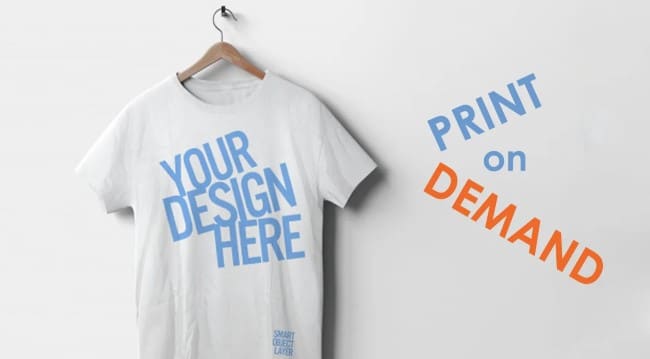
In the Print on Demand (POD) model, a mockup is a visual simulation of a product after the design has been fully printed. Instead of producing physical samples for photography, sellers use graphic design software or pre-made mockup libraries to place their designs onto products such as T-shirts, hoodies, ceramic mugs, or canvas prints.
A high-quality mockup does more than simply display the printed design. It clearly conveys the garment’s fit, fabric texture, color accuracy, and real-life usage context, helping customers better visualize the final product.
Why Are Mockups the “Soul” of the POD Business Model?
Unlike traditional retail, POD sellers do not hold inventory and often do not have real product photos at the beginning. As a result, mockups play a critical role:
- A tool for delivering the product experience: Mockups help customers clearly visualize how the product will look when worn or placed in a real living space.
- A bridge between design and reality: They transform a flat, two-dimensional design file into a lifelike, commercially viable product.
- A key factor in conversion rates: In the POD ecosystem, the mockup is effectively the first and often the only “product” customers interact with before deciding to make a purchase. It directly influences buyer emotion and trust.
Many sellers make the mistake of overusing visual effects, creating mockups that look far more polished than the actual product. While an overly idealized mockup may help close sales quickly, it can lead to serious long-term consequences: high return rates, one-star reviews, and damage to store credibility when attempting to scale sustainably.
Optimizing Mockups to Drive Revenue Growth
To improve SEO performance and keep customers engaged, make sure your mockups meet the following criteria:
- High resolution: Avoid images that appear pixelated or blurry.
- Multiple viewing angles: Provide at least 3–4 mockup images, including front view, back view, close-ups of fabric texture, and lifestyle images.
- Accurate color representation: Colors shown in the mockups must match the fulfillment provider’s official color chart to ensure consistency with the final product.
POD Purchasing Behavior: What Do Customers Look at First?
To optimize conversion rates, sellers need to understand the behavioral psychology behind how customers shop for Print on Demand (POD) products. Unlike traditional eCommerce, POD customers make purchasing decisions based on visualization they buy through what they can imagine rather than what they can physically see or touch.
Priority Order in the First 5 Seconds
When a potential customer lands on a product page, their brain runs a rapid information-scanning process in the following order of priority:
- Product images (Mockups): The first visual touchpoint that shapes emotional response.
- Design: The printed content and message does it resonate with the customer’s interests or needs?
- Price: Does it align with the customer’s budget and the perceived value created by the visuals?
- Social proof (Reviews) & description: Validation of trust through previous buyers’ experiences.
Within this behavioral sequence, the mockup acts as a “gatekeeper.” In just a few seconds, if the images fail to capture attention, customers will exit the page immediately before they even read the design or consider the price.
Mockups Help Customers Answer Three Unspoken Questions
At its core, an effective mockup is not just about looking good it must eliminate customer uncertainty by answering three key questions:
- Usability: What will this product look like when I wear it or use it in real life?
- Visual harmony: Do the print colors and the base product colors (shirt, mug, canvas, etc.) work well together?
- Physical credibility: Do the fit, stitching, and material quality match what I’m imagining?
Mockups: A Tool for Shaping Expectations
The fundamental difference of POD is that customers are paying for a future experience. Because the product does not yet exist in physical form, the mockup becomes the only tool available to guide customer expectations.
- The more vague the expectation, the higher the bounce rate.
- The closer the expectation is to reality, the higher the likelihood of conversion (add to cart).
Conclusion: In the POD industry, design is the soul of the product but the mockup is its face. Don’t let a million-dollar design be rejected simply because of an unprofessional mockup.
How Do Mockups Affect Conversion Rates?

In the Print on Demand model, the conversion rate (CR) is not merely a calculation between traffic and order it is the result of trust. Between “seeing a design” and “purchasing a product,” the mockup is the most critical catalyst that drives the decision to check out.
Why Do High-Quality Mockups Boost Conversion Rates?
A well-crafted mockup goes beyond visual appeal; it functions as a psychological tool that helps to:
- Increase time on page: Professional, visually engaging images keep customers on the product page longer, allowing them to explore the design in detail.
- Remove psychological barriers: Online shopping is often accompanied by the concern that “images are for illustration purposes only.” Realistic mockups reduce perceived risk and build strong confidence in product quality.
- Trigger purchase desire: By placing the product in the right real-life context, mockups help customers visualize themselves using the item, immediately activating the emotional desire to own it.
The Consequences of Using Low-Quality Mockups
On the other hand, when mockups are poorly executed, color-inaccurate, or do not reflect the actual fit of the product, sellers can quickly face a performance “nightmare”:
- High bounce rates: Customers click on ads but leave immediately because the images look unrealistic or unprofessional.
- Wasted ad spend: You may drive thousands of visitors to your website, but if the mockups fail to convince, the cost per conversion becomes extremely expensive.
- Misjudging the market: Many sellers mistakenly believe their design does not fit the niche or that their ads are targeting the wrong audience, when in reality the issue lies in unconvincing product visuals.
Large-scale campaigns can only be sustainable when mockups accurately reflect the true essence of the final product. Don’t let customers walk away simply because your visual presentation fails to match the value of your design.
Top 5 Mockup Mistakes That Cause POD Sellers to Lose Money Unnecessarily
In the Print on Demand industry, mockups are a powerful sales weapon but they can also become a double-edged sword. Below are the most common mistakes that even experienced sellers frequently make.
Mockups That Look Too “Perfect” Compared to the Actual Product
This is the most serious mistake and a major cause of high return rates. Many sellers rely on overly polished 3D renders with flawless lighting and overly vibrant colors that exceed the real printing capabilities of DTG or screen printing. When customers receive a product with more muted colors or less sharp details than expected, brand trust can collapse immediately.
Inconsistency Between Mockups and Garment Fit (Blank)
Each blank garment such as Gildan, Bella + Canvas, or Comfort Colors has its own fabric weight, drape, and fit (oversize, slim fit, etc.). Using the same generic, “lifeless” mockup for every blank leads to customer misunderstanding.
For example, using a fitted-shirt mockup while selling a heavyweight T-shirt can make customers feel misled about the fabric and fit.
Intentionally Hiding Technical Details
Unprofessional mockups often overlook important touchpoints such as neckline stitching, sleeve cuffs, or the actual thickness of the fabric. While hiding these details may temporarily boost conversion rates, the long-term consequences are one-star reviews and a surge in refund requests once customers receive the product.
Overusing Lifestyle Mockups That Don’t Match the Target Audience
Lifestyle images (models shown in real-life settings) are powerful for emotional impact, but many sellers choose models that look too “Westernized” or settings that feel unfamiliar to their target audience. This creates a lack of relatability and makes the product feel mass-produced rather than personalized.
“Standing Still” with Generic Stock Mockups
Free or low-cost stock mockup libraries are useful for quickly testing niches. However, once you begin scaling ads or building a brand, using the same images as thousands of other sellers makes your store appear cheap and untrustworthy. This is often the biggest barrier preventing sellers from reaching the next stage of growth.
Stock Mockups vs. Real Product Photos: Which Is the Optimal Choice for Scaling a Brand?
In the POD journey, choosing between stock mockups and real product photos is a strategic decision that balances cost and effectiveness. Understanding the differences between these two options allows sellers to allocate resources more efficiently at each stage of business growth.
Stock Mockups
Stock mockups can be seen as a “perfect demo,” allowing sellers to quickly list products without ever holding the physical item.
Advantages:
- Speed and cost efficiency: Create multiple images within minutes at almost no cost.
- Flexibility: Easily change colors, layouts, or swap designs with just a few clicks.
- Ideal for testing: Best suited for testing new designs or niches to gauge market response.
Disadvantages:
- Lack of uniqueness: Images are easily duplicated and shared by thousands of competitors.
- Trust gap: As customers become more discerning, they can quickly recognize rendered images and may question the actual product quality.
Real Product Photos
Once you’ve identified a “winner” design, real product photos become the weapon that helps you stand out from the crowd.
Advantages:
- Absolute credibility: Accurately reflect every detail from fit and fabric texture to actual print colors.
- Risk reduction: Narrow the gap between customer expectations and reality, helping reduce refund rates and eliminate negative reviews.
- Higher repeat purchase rate (LTV): Customers feel more confident and perceive greater professionalism when they see real people and real products.
Disadvantages: Higher costs for models, photography, and longer production and post-processing time.
Quick Comparison: Which Option Should You Choose?
| Criteria | Stock Mockups | Real Product Photos |
| Best use stage | Niche testing / Design testing | Ad scaling / Brand building |
| Credibility | Medium | Very high |
| Exclusivity | Low (easily duplicated) | High (unique) |
| Impact on conversion | Effective for attracting clicks | Effective for closing sales & retention |
A “Win-Win” Hybrid Strategy for POD Sellers
Successful POD sellers don’t choose one approach over the other—they combine both strategically:
- Use high-quality stock mockups to cover the market and identify high-potential winning designs.
- Invest in real product photography and video for winning products to scale ads efficiently and build a strong, sustainable brand foundation.
Conclusion: If you want to move fast, stock mockups are the way to go. If you want to grow long-term and sustainably, real product photos are essential.
In the Print on Demand model, mockups are not merely illustrative images they are a direct factor influencing purchasing decisions, conversion rates, and return rates. When customers cannot see or try the actual product, all expectations are formed based on the mockups presented. A mockup with incorrect fit, inaccurate colors, or one that appears “too perfect compared to reality” forces POD sellers to pay the price through wasted traffic and negative reviews.
In contrast, honest mockups that accurately reflect the real product help customers make faster purchasing decisions, reduce post-purchase risk, and create a solid foundation for sustainable scaling. For POD sellers in 2026, optimizing mockups is no longer optional—it is a mandatory requirement for long-term growth in the U.S. market.
Understanding the true role of mockups and applying the right visual strategy at each stage of growth enables POD sellers to achieve more stable sales, better risk control, and the ability to build a store with real, lasting value.