



As we move into 2026, the Print on Demand (POD) market is no longer a game driven solely by low costs or aggressive advertising. As sales platforms tighten delivery SLA requirements and consumers increasingly prioritize speed and overall shopping experience, POD sellers are forced to reassess their entire fulfillment strategy. In this context, U.S.-based POD manufacturing is gradually emerging as a strategic choice not only to optimize operations, but also to protect scalability and long-term cash flow. This article analyzes the POD market landscape in 2026, explains why sellers should prioritize U.S.-based production, compares fulfillment in the U.S. versus overseas, and clarifies common misconceptions that continue to hold many sellers back from adopting this model.
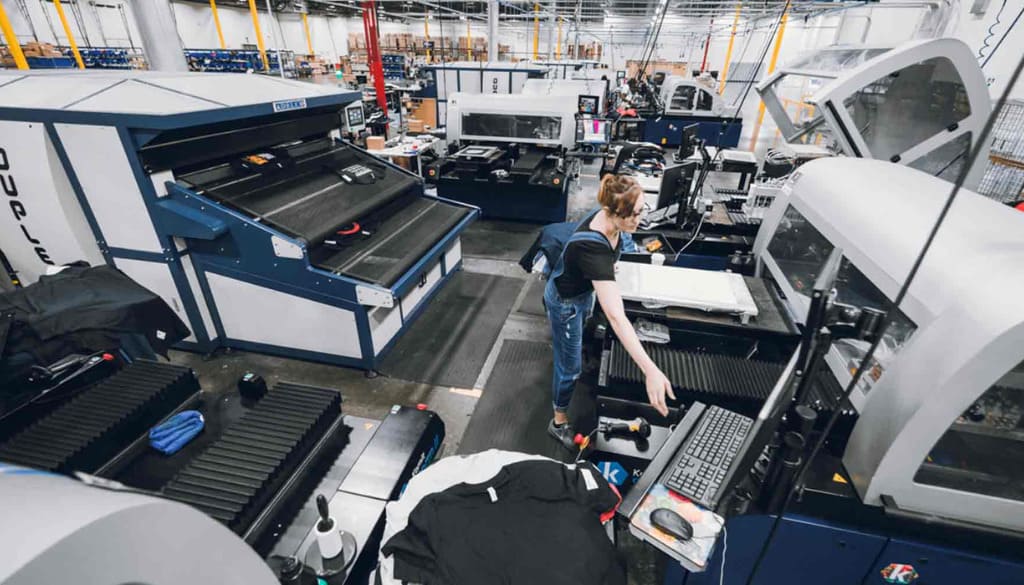
The POD Market Landscape in 2026
The year 2026 marks a major turning point for the global Print on Demand (POD) industry. The “golden era,” when sellers could generate orders simply by having attractive designs and pouring money into advertising, has officially come to an end. In its place, operations have emerged as the critical factor one that ultimately determines the survival and long-term growth potential of POD businesses.
Platforms Are No Longer “Seller-Friendly”
Major eCommerce platforms such as TikTok Shop, Etsy, and Amazon are redefining the rules of the game with increasingly strict standards. In 2026, search and distribution algorithms are no longer driven solely by sales performance, but place absolute priority on buyer experience.
This shift is reflected in a series of stringent operational requirements:
- Tighter delivery SLAs: The time from order placement to order processing and shipment is being reduced to the bare minimum.
- Stricter monitoring of Late Delivery Rate (LDR): Exceeding the allowable threshold for late deliveries can immediately trigger penalties for your store.
- Harsher enforcement measures: Daily order caps, reduced product visibility, or even extended payment reserves have become standard platform-level controls.
U.S. Buyer Expectations: “Fast” Is No Longer a Nice-to-Have
By 2026, U.S. consumers are no longer patient with long, cross-border shipping delays. With the widespread adoption of Prime and ultra-fast last-mile delivery services, their definition of the “new normal” has fundamentally shifted:
- Ideal delivery speed: Delivery within 2–5 days is now the benchmark for customer satisfaction.
- Information transparency: Tracking must be updated in real time. Any breakdown in shipping visibility quickly leads to anxiety and customer complaints.
- Post-purchase policies: Clear and fast return and exchange processes are a prerequisite for customers to confidently click the “Buy Now” button.
In reality, POD orders delivered within 10-15 days often lead to serious consequences: lower conversion rates, higher refund rates, and damaging one-star reviews that can significantly erode a store’s credibility.
The “Natural Selection” Phase: Operations-Driven Sellers Rise
The POD market in 2026 is undergoing a period of intense natural selection. Sellers who focus solely on short-term gains-relying heavily on ads while outsourcing quality to the cheapest production partners-are gradually being pushed out of the market. In contrast, the teams that survive and continue to scale share a distinctly different operational mindset:
- Deep understanding of operational excellence: They treat logistics management, inventory control (where applicable), and issue resolution as core competencies rather than secondary tasks.
- Proactive fulfillment strategies: Instead of relying on a single provider, they build multi-region fulfillment networks or leverage U.S.-based warehouses to shorten delivery distances.
- Supply chain optimization: They do not chase the lowest price. Instead, they choose partners with consistent print quality and reliable production timelines—even during peak seasons.
Why Should Sellers Prioritize U.S.-Based POD Manufacturing in 2026?
In today’s highly competitive eCommerce landscape, choosing a fulfillment location is no longer simply a matter of cost—it is a strategic decision that directly impacts the survival and long-term growth of a POD business. Below are four key reasons why U.S.-based POD manufacturing is becoming a top priority for successful sellers in 2026.
Faster Delivery Speed
In 2026, speed is no longer a competitive advantage, it has become a baseline requirement. With U.S.-based production, the fulfillment process is significantly streamlined: production → packaging → domestic delivery.
By eliminating intermediaries such as cross-border shipping and customs clearance, order statuses can move to “In Transit” much faster. As platforms like TikTok Shop and Amazon allow sellers only 2–4 days to process orders, U.S.-based manufacturing has become the most reliable way to consistently meet SLA (Service Level Agreement) requirements.
Reducing SLA Risks and Platform Penalties
Overseas fulfillment (such as production in China or Southeast Asia) often exposes sellers to operational “nightmares,” including:
- Waiting to consolidate enough orders before initiating shipment
- Delays caused by port congestion or flight disruptions
- Tracking updates that are slow or not properly synchronized with platform systems
In contrast, U.S.-based production allows sellers to maintain tight control over order processing timelines. This significantly reduces the Late Delivery Rate (LDR), a key metric that often triggers order caps, reduced visibility, or even account suspension. Protecting core operational metrics ultimately means protecting your ability to scale the business sustainably over the long term.
Elevating the Buyer Experience
A satisfied U.S. customer is not driven by design alone, but by peace of mind throughout the entire shopping journey. Domestic production delivers clear advantages:
- Transparent tracking: Tracking numbers are activated immediately by trusted carriers such as USPS, UPS, and FedEx.
- Reduced risk of loss: The complexity of international shipping is eliminated, significantly lowering the chances of packages going missing.
- Professional after-sales support: Returns and exchanges become faster, simpler, and more cost-efficient when fulfillment is handled within the U.S.
These factors directly contribute to higher volumes of positive (five-star) reviews and increased customer lifetime value (LTV), enabling sellers to build a base of loyal, repeat customers rather than relying on one-time purchases.
Getting Ahead of the “Local-First” and “Made in USA” Trends
By 2026, U.S. consumers are increasingly prioritizing sustainability and social responsibility. They are more inclined to support products labeled “Made in USA” or those backed by transparent, locally based supply chains.
This trend is especially impactful in niches such as family gifts, home and family products, patriotic themes, and handmade-style items, where a U.S.-made label becomes a powerful unique selling point (USP). It builds strong trust in fabric quality, printing materials, and safety standards, making it easier to justify higher price points in exchange for peace of mind and perceived product value.
Detailed Comparison: U.S.-Based Fulfillment vs. Overseas Fulfillment
Below is a visual comparison to help sellers clearly understand the key differences:
| Criteria | U.S.-Based Fulfillment | Overseas Fulfillment |
| Production Time | 1–3 days | 3–5 days |
| Shipping Time | 2–5 days | 7–20 days |
| Tracking Stability | Very high (real-time updates) | Low (frequent first-leg delays) |
| Blank Product Quality | U.S. standards (Gildan, Bella+Canvas, etc.) | Mixed quality, difficult to maintain consistency |
| Refund Rate | < 1% | 3%–7% (due to late delivery or defects) |
| Scalability | Easy (highly automated systems) | Difficult (dependent on international logistics) |
| Platform Compatibility | TikTok Shop, Amazon, Etsy, eBay | Shopify (requires careful shipping handling) |
Common Misconceptions About U.S.-Based POD Manufacturing
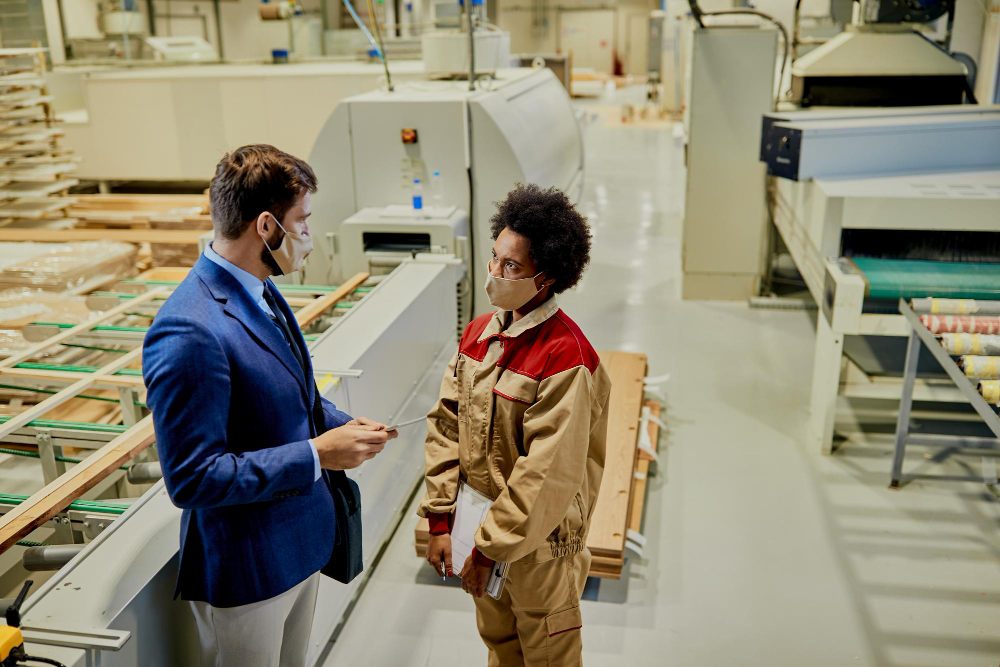
As we move into 2026, U.S.-based POD fulfillment has become a dominant industry trend. However, many sellers remain hesitant due to outdated assumptions. Misunderstandings around costs and operational complexity can cause sellers to miss significant growth opportunities. Below, FlashShip breaks down the four most common misconceptions about U.S.-based POD manufacturing.
Misconception #1: “U.S.-Based Manufacturing Is Only for Big Brands”
Many sellers believe that U.S.-based fulfillment is only suitable for businesses with massive capital and consistently high order volumes. In reality, the opposite is true. By 2026, U.S. fulfillment providers have optimized their operations to serve sellers at every stage:
- No MOQ (Minimum Order Quantity): You can start with as little as a single order.
- Flexible production lines: Automated systems allow factories to process thousands of different designs simultaneously.
- Ideal for niche testing: Faster delivery means you can receive customer feedback within days, allowing you to decide whether to scale a design up to three times faster than with overseas production.
Misconception #2: “Higher Base Costs Mean Lower Profit”
This is one of the most dangerous mindset traps for POD sellers. If you focus solely on the production cost shown on the invoice, you risk overlooking the massive “hidden costs” associated with low-cost fulfillment providers:
- Higher refund and dispute rates: Late deliveries or defective products drive refunds, directly eroding profit.
- Frozen cash flow: When Late Delivery Rate (LDR) metrics rise, platforms such as TikTok Shop and Amazon may hold payouts for extended periods.
- Increased advertising costs: Stores burdened with one-star reviews due to slow shipping often see ad costs spike, making it difficult, or impossible,to scale campaigns.
Many sellers choose U.S.-based fulfillment even with a base cost that is $2–$3 higher. In return, they benefit from higher repeat purchase rates and more stable ad accounts, ultimately achieving significantly higher net profit by the end of the month.
Misconception #3: “Print Quality Is the Same Everywhere”
While DTG or DTF printing technologies may appear similar on the surface, final results vary widely due to several critical factors:
- Consistent blank sourcing: U.S. facilities prioritize industry-standard blanks such as Gildan and Bella+Canvas, known for low shrinkage and reliable fabric quality.
- Strict quality control (QC) processes: Labor and management standards in the U.S. are more rigorous, ensuring consistency across thousands of products.
- Operational stability: Sellers avoid scenarios where one batch looks perfect while the next suffers from ink peeling or fading, issues commonly seen with unprofessional or poorly managed facilities.
Misconception #4: “U.S.-Based Manufacturing Eliminates Price Competitiveness”
By 2026, the race to the lowest price has given way to a race for value. U.S. customers are willing to pay $5–$10 more per product if they are confident it will arrive within three days.
Rather than competing solely on discounts, smart sellers targeting the U.S. market typically focus on:
- Optimizing AOV (Average Order Value): Through upselling strategies and bundled product offerings.
- Building trust and credibility: Labels such as “Shipped from USA” act as powerful trust badges that increase conversion rates without the need for price cuts.
The Print on Demand market in 2026 is entering a period of intense filtering, where delivery speed, operational stability, and the ability to meet SLA requirements have become decisive factors for seller survival. Choosing U.S.-based POD manufacturing not only helps sellers optimize delivery times and improve the buyer experience, but also minimizes operational risks and lays a solid foundation for long-term business scaling. In an increasingly competitive environment, the right fulfillment strategy will serve as a critical advantage allowing sellers to achieve sustainable growth rather than chasing short-term cost competition.
If you need further consultation on POD products, U.S.-based production processes, or FlashShip account registration, please contact our hotline at (+84) 943 024 337 or visit FlashShip.net for timely and detailed support.