



In an increasingly competitive Print-on-Demand market, fulfillment is no longer just about printing and shipping it has become a core factor that determines a seller’s ability to scale and maintain profitability. One of the standout models in 2026 is multi-line production fulfillment, a solution that optimizes order processing speed, reduces the risk of overload, and enhances operational flexibility. So, what is multi-line production fulfillment, and why is it considered a key competitive advantage for POD sellers on platforms like Etsy, TikTok Shop, and Amazon? This article will give you a complete overview and show you how to leverage this model for sustainable scaling.
What is Multi-Line Production Fulfillment?
In the context of cross-border eCommerce in 2026 where standards are becoming increasingly stringent the concept of multi-line production fulfillment is no longer a luxury term but a survival standard for any POD business aiming for sustainable growth.
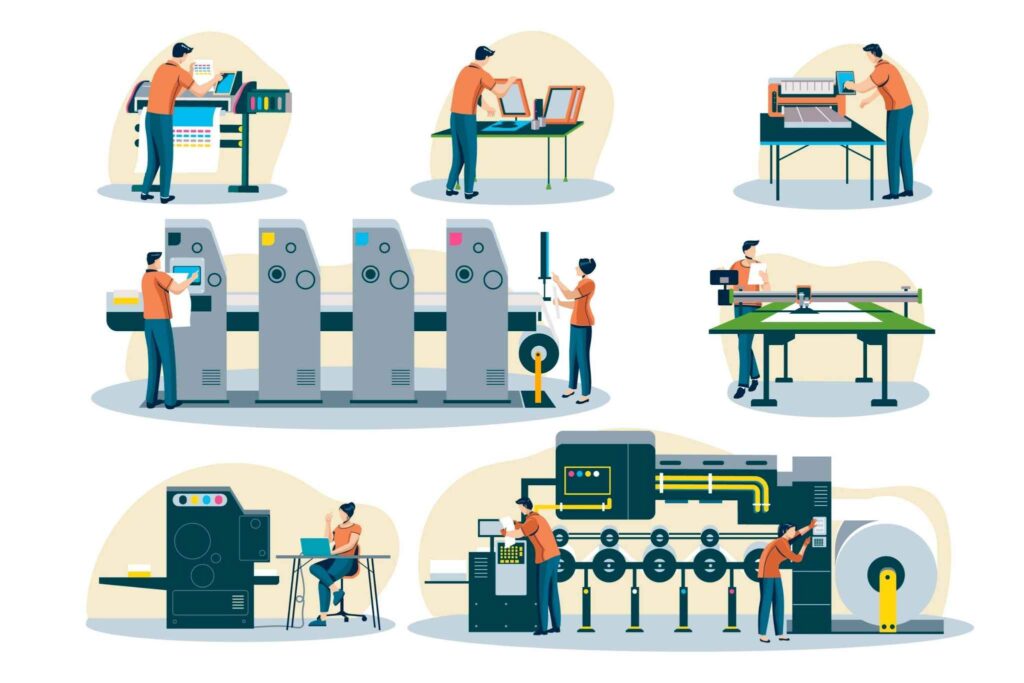
At its core, multi-line production fulfillment is an industrial-scale operational ecosystem in which a fulfillment provider establishes and activates multiple production lines running in parallel. These lines are flexibly structured and allocated across four core dimensions:
- Multiple lines using the same technology: Instead of operating just one or two machines, the facility runs dozens of high-end DTG printers in parallel. When order volume surges, these lines share the workload, distributing pressure to maintain consistent speed.
- Diverse printing technologies: A comprehensive system incorporates multiple technologies to serve different product niches. This includes DTG (premium, soft-hand feel embedded into fabric), DTF (cost-optimized with Basic DTF or Standard DTF flows), high-resolution UV printing for acrylic/custom shapes, laser engraving for wood products, and sublimation for all-over print items, tote bags, and home decor.
- Multiple geographic locations: Production infrastructure is not confined to a single location but strategically distributed across key logistics hubs (e.g., US East, US West, or EU hubs).
- Integrated matrix structure: The seamless combination of all these elements forms a large-scale production network, automated and intelligently orchestrated through advanced API systems.
A “world of difference” compared to the traditional model
To make it easier to visualize, the difference between a traditional printing provider (single-line or single-factory model) and multi-line fulfillment can be compared to transportation infrastructure:
- Single-line (Single-route model): When orders come in, everything must line up and wait in sequence. Even a minor issue such as a clogged printhead, staff absence, or running out of blank apparel can immediately bring the entire operation to a halt. The inevitable result is production bottlenecks, SLA violations, and delayed tracking updates.
- Multi-line (Multi-route model): In this model, the flow of orders is continuous, with built-in redundancy. If one production line goes down for maintenance, the system instantly reroutes orders to backup lines. With multiple “lanes” available, there is no risk of supply chain disruption.
Thanks to this structure, multi-line fulfillment enables intelligent order allocation. The system automatically routes orders to the facility closest to the customer’s location and selects the most suitable production line based on the defined pricing strategy. As a result, businesses can eliminate production bottlenecks, optimize costs, and maximize order fulfillment speed.
Advantage #1: Reducing the Risk of Peak-Season Overload
Anyone who has experienced peak seasons like Q4 sales, Black Friday, or the surge of early-year holidays understands the nightmare of “production overload.” When order volume increases by 10x or even 50x compared to normal days, single-line printing facilities can quickly collapse.
Shortages of blank apparel (especially popular items like Gildan G5000 women’s t-shirts or seasonal hoodies and sweatshirts), overworked machines leading to breakdowns, and exhausted staff can push production times from 2–3 days up to 7–10 days.
A multi-line system is designed to solve this problem at its core. With intelligent allocation, massive order volumes are divided and distributed across multiple production lines, ensuring smooth and consistent processing.
Moreover, a strong multi-line fulfillment partner can maintain continuous operations even during extended Asian holidays like Lunar New Year thanks to large-scale production facilities based in the U.S. This ensures your order flow is never interrupted, allowing you to fully capture peak-season revenue while competitors are forced to pause their ads due to factory shutdowns.
Advantage #2: Accelerating Ad Scaling Speed
Scaling is the golden moment every POD seller strives for. When you hit a winning campaign, increasing your ad budget to thousands of dollars per day becomes completely normal. However, the speed of ad scaling is directly proportional to operational pressure.
If your backend (order processing system) cannot keep up with your frontend growth, you are essentially “burning your own house down.” Orders surge, but production can’t keep up, tracking numbers are delayed, and late delivery rates spike. The immediate consequences are customer complaints, one-star reviews, and rising dispute/chargeback rates. Ultimately, your payment gateways (such as PayPal, Stripe) or ad accounts may get restricted or even suspended.
This is especially critical with the rapid rise of TikTok Shop US, where strict SLA requirements demand order processing within just 2 business days a major challenge for many sellers.
With multi-line fulfillment, these concerns are eliminated. A large-scale production infrastructure allows the system to flexibly increase capacity, redistribute workloads to available lines, and handle sudden spikes in order volume. Production time is minimized, and tracking numbers are generated quickly. Meeting strict SLA standards on platforms like TikTok Shop is no longer a burden allowing you to confidently scale ads 10x or even 20x while keeping your accounts healthy and cash flow moving efficiently.
Advantage #3: Flexible Technology & Cost Optimization
One of the biggest mistakes sellers make is applying the same cost standard to every product. Price-sensitive customers don’t require premium print quality, while high-end buyers especially those purchasing gifts for occasions like Valentine’s Day or anniversaries are willing to pay more for flawless results. A rigid, single-line production approach causes sellers to lose their competitive edge either on pricing or product quality.
Multi-line fulfillment gives sellers full control to optimize margins for each product niche:
- Maximize profits with entry-level products: Want to launch simple t-shirt designs to attract traffic? Route these orders to a cost-optimized production line. The significantly lower base cost allows you to set highly competitive prices, outperform competitors on marketplaces while maintaining your desired profit margins.
- Build a premium brand with high-end products: For customers ordering complex designs or special print placements (e.g., sleeve prints), route them to DTG production lines. Powered by advanced machines like Kornit Apollo, these lines deliver pixel-perfect prints, vibrant colors embedded smoothly into the fabric, and long-lasting durability. This superior quality helps maximize Customer Lifetime Value (LTV), encouraging repeat purchases.
Beyond apparel, large-scale fulfillment systems also integrate production lines for niche products making it easy to build upsell and cross-sell funnels. Customers buying t-shirts can be offered complementary products such as tote bags, mugs, home decor items, keychains, or unique gift products like glass-acrylic ornaments and custom shape standees.
With this approach, you can build a diversified eCommerce “ecosystem” with just a single operational partner.
Advantage #4: Backup & System Reliability
In supply chain operations, Murphy’s Law always applies: “Anything that can go wrong will go wrong.” Issues such as defective ink, clogged printheads, localized power outages, or sudden shortages of specific blanks are constant risks.
For a single-line printing provider, a single machine failure can freeze the entire operation. Sellers are left helpless watching orders get canceled while the system continues to report delays.
The invaluable advantage of a multi-line system lies in its robust backup mechanism. If one production line goes down for maintenance, the automated system immediately reroutes orders to backup lines, ensuring that production timelines are not delayed even by an hour. This risk distribution is the foundation for maintaining an exceptionally low error rate.
Moreover, reputable fulfillment partners often provide sample printing and free product photography support. This allows sellers to verify quality across different production lines and finalize marketing assets before scaling campaigns ensuring maximum safety for their investment.
Advantage #5: Aligning with Fulfillment Trends in 2026
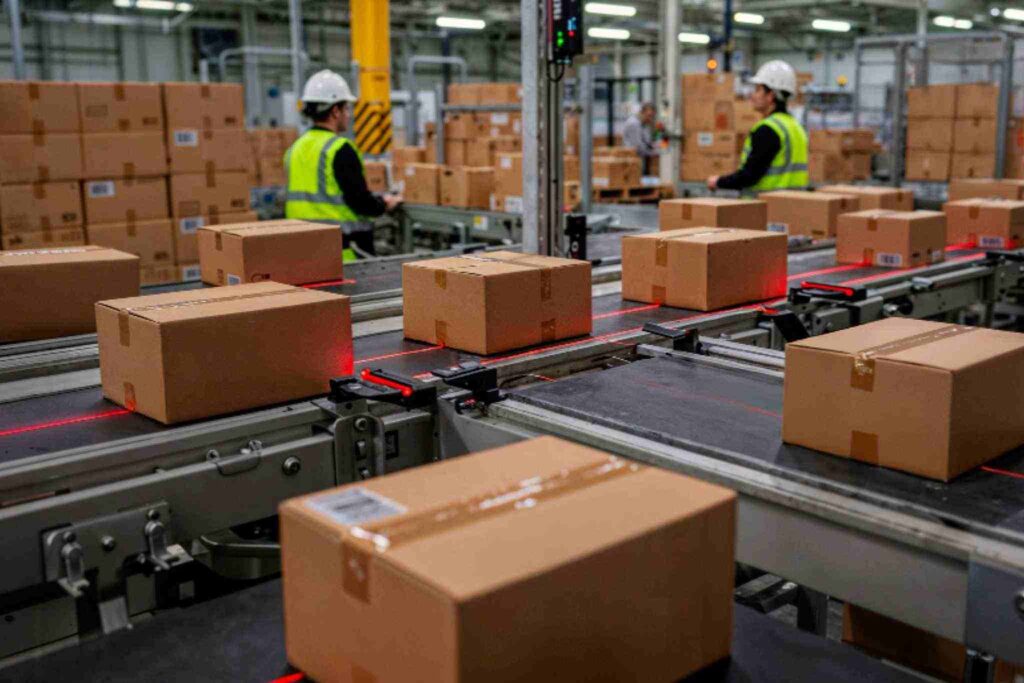
The Print-on-Demand market in 2026 no longer has room for shortcuts. New challenges such as stricter intellectual property (IP and trademark) enforcement, the rise of sustainable consumption, and increasingly high expectations from U.S. buyers are reshaping the entire landscape.
Sellers can no longer rely on “guerrilla-style” tactics with unreliable printing providers. Building a transparent supply chain with US-based production and multi-line capabilities is the only viable path to a sustainable POD business.
This approach not only ensures speed and quality, but also delivers flexibility the ultimate advantage for adapting to constant changes in eCommerce platform algorithms.
Multi-line production fulfillment is not just an operational upgrade it represents a fundamental shift in the business mindset of modern POD sellers. As the market increasingly prioritizes delivery speed, operational stability, and customer experience, relying on a single production line becomes a major barrier to scaling.
In contrast, a multi-line fulfillment system empowers sellers to stay in control under all circumstances from handling large order volumes and optimizing costs for each product, to maintaining consistent timelines even during unexpected disruptions. It also provides the foundation for confidently executing multiple strategies at once, such as testing new products, expanding into new niches, and increasing ad spend without the risk of system breakdowns.
In the long run, competitive advantage will not come from how many designs you have, but from how strong your backend system is in supporting operations and scaling. Therefore, choosing a multi-line production fulfillment model is the key for POD sellers to achieve sustainable growth and go further in 2026 and beyond.